Entertainment
The Folk Tale That May Explain FROM

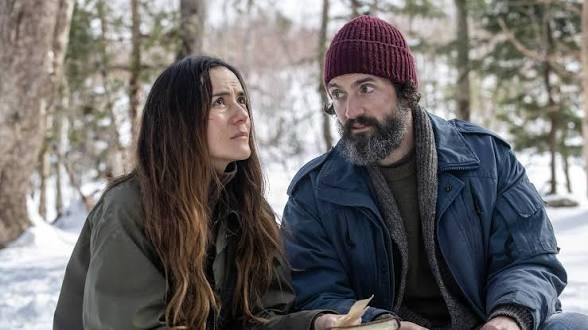
Few television shows have generated as many fan theories as FROM. Every new episode sends viewers scrambling to Reddit, YouTube, and TikTok, searching for clues hidden in dialogue, symbols, dreams, and seemingly random objects. Some believe the town is a government experiment. Others think it’s purgatory, an alternate dimension, or even a simulation.
But what if the answer is much older than any of those theories?
What if FROM isn’t rooted in science fiction at all?
What if it’s drawing from one of humanity’s oldest forms of storytelling: folklore?
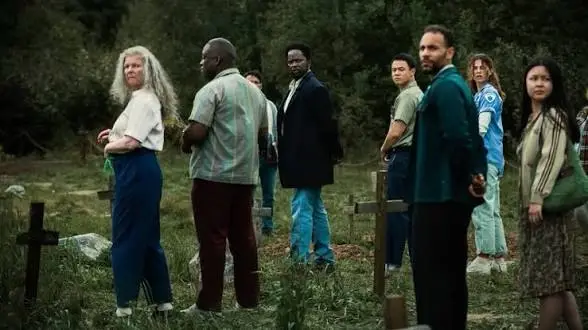
While creator John Griffin has never confirmed that the series is based on a single legend, the show’s mythology feels remarkably similar to centuries-old European folk tales—particularly Celtic stories about the Otherworld, a supernatural realm that exists just beyond our own. The similarities are so striking that they almost feel intentional.
In Celtic mythology, the Otherworld wasn’t heaven or hell. It was a parallel realm inhabited by mysterious beings often called the Fair Folk, or the Aos Sí. Unlike the tiny winged fairies popularized in children’s books, these beings were powerful, unpredictable, and often terrifying. They weren’t necessarily evil, but they operated according to their own rules, and humans who crossed into their world rarely returned unchanged.
The most unsettling part?
People usually entered the Otherworld by accident.
Many ancient tales begin with someone traveling an ordinary road before encountering something strange—a dense fog, an unusual tree, a mysterious hill, or an obstacle blocking the path. One wrong decision was enough to cross an invisible boundary into another realm where time, space, and reality no longer behaved the way they should.
That’s almost exactly how every resident arrives in FROM.
Each family begins with a normal drive before encountering the now-iconic fallen tree stretched across the road. They turn around expecting to continue their journey, only to discover that every road leads back to the same impossible town. Once they’ve crossed that invisible threshold, escape becomes impossible.
The tree itself may be one of the show’s biggest clues.
Across Celtic folklore, certain trees were considered sacred gateways between worlds. Hawthorn, ash, and oak trees were believed to mark entrances to supernatural realms. Disturbing them was thought to bring terrible consequences. In many stories, simply crossing beneath or around one of these trees symbolized leaving the human world behind.
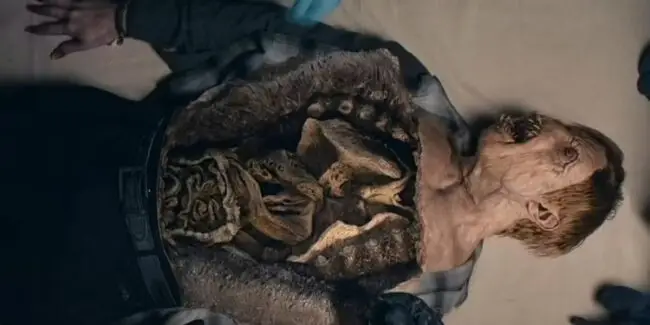
Whether the fallen tree in FROM represents one of these gateways or simply serves as a modern interpretation, the symbolism is difficult to ignore.
Then there’s the town itself.
In folklore, the Otherworld often exists outside the normal laws of geography. Roads loop endlessly. Forests seem alive. Travelers lose all sense of direction. Someone may walk for hours believing they’re heading home only to arrive exactly where they started. Maps become meaningless because the place itself refuses to obey logic.
That’s essentially life inside FROM.
Every attempt to leave ends the same way. No matter which direction someone drives, the town always finds a way to bring them back. It’s less a physical location than a supernatural trap.
The monsters also fit surprisingly well within traditional folklore.
One of the reasons they’re so unsettling is because they don’t behave like modern horror villains. They don’t sprint through the woods or mindlessly attack anyone they see. They smile. They speak softly. They imitate kindness. Sometimes they even resemble ordinary neighbors.
Most importantly, they rely on deception.
Throughout European folklore, supernatural beings were often described as masters of manipulation. They tempted humans into making poor decisions rather than forcing them outright. They lured travelers off safe paths, mimicked familiar voices, or convinced people to willingly surrender the protection that kept them safe.
In FROM, the creatures can’t simply burst into a protected home. They wait patiently for someone to let them in. That emphasis on invitation, trust, and manipulation feels far closer to ancient fairy lore than traditional monster movies.
The talismans reinforce that connection.
Protective charms have existed in nearly every culture for thousands of years. Whether carved from stone, wood, or metal, they were believed to establish boundaries that supernatural forces could not cross. Instead of relying on weapons, people relied on symbols and ritual for protection.
The talismans in FROM serve almost the exact same purpose. They don’t destroy evil—they establish sacred space.
Even the mysterious bottle trees have deep roots in folklore.
Bottle trees originated in several traditions, including Central African spiritual practices that later spread throughout the American South. Empty bottles hanging from tree branches were believed to capture wandering spirits before they could enter nearby homes. Depending on the tradition, the rising sun would either destroy the trapped spirits or keep them imprisoned.
The show transforms that real-world folklore into something far more mysterious, using bottle trees as spiritual landmarks that seem connected to movement between places, memories, and perhaps even different points in time.
Then there are the children.
One of the oldest themes in folklore is the disappearance of children into enchanted forests or supernatural realms. Long before fairy tales became children’s stories, they served as warnings. Stories like Hansel and Gretel, The Pied Piper, and countless Celtic legends warned parents about children wandering too far from safety or being taken by forces they couldn’t understand.
FROM repeatedly returns to children as the emotional center of its mythology. The mysterious children appearing throughout the series don’t feel like random ghosts—they feel like echoes of those ancient cautionary tales.
Perhaps that’s why no single theory fully explains the show.
It doesn’t appear to be adapting one legend.
Instead, it seems to borrow pieces from dozens of myths across different cultures and weave them together into something entirely original. Celtic gateways. Protective talismans. Spirit traps. Haunted forests. Cycles of sacrifice. Cursed roads. Living memories. Time itself becoming unstable.
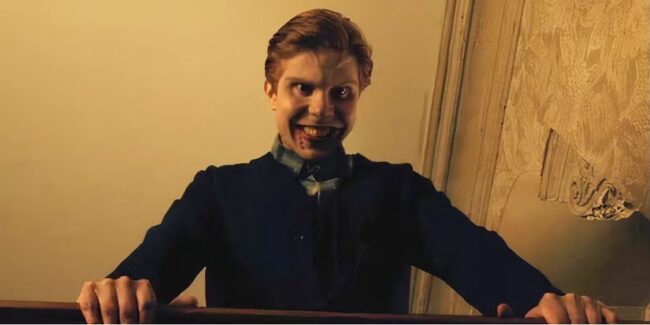
The result feels less like a traditional horror series and more like a modern folk tale disguised as prestige television.
So where does all of this leave Season Five?
I think the final season will stop introducing new mysteries and begin revealing why the cycle exists in the first place.
My biggest prediction is that the town isn’t actually the villain.
It’s the prison.
Whatever ancient force created this place has been feeding the cycle for generations, and the monsters may simply be its servants rather than the true source of evil.
I also don’t believe everyone survives.
Boyd has become the emotional backbone of the series. Like many heroes in mythology, his journey feels destined to end in sacrifice. He may be the one person capable of breaking the curse, even if he never gets to enjoy the freedom that follows.
Victor’s story also feels unfinished. For years he has been treated as the town’s lone survivor, but I think he’s something much more important. He’s the keeper of its memory. Once every piece of his past is uncovered, the audience may finally understand what really happened long before anyone else arrived.
Julie may ultimately become the show’s most important character. As the series has begun exploring nonlinear time, it feels increasingly possible that she won’t simply witness the town’s history—she’ll influence it. Rather than defeating the evil directly, she may become the person who reaches the beginning of the story and finally breaks the cycle before it can repeat itself.
And maybe the show’s biggest clue has been hiding in its title all along.
It’s called FROM.
Not because the story is about where these people are going.
Because it’s about where all of this came from.
If that’s true, the ending won’t simply explain the monsters. It’ll explain the origin of the story itself.
Whether these theories prove correct or not, FROM has already accomplished something rare. It has made ancient folklore feel terrifying again, reminding audiences that some of humanity’s oldest stories still have the power to haunt us centuries later.




Library of Congress Monthly Family Days Continue Through December 2026

Former Forest Park Teacher, Coach Acquitted of Indecent Exposure Charges

Iron Maiden and Megadeth played to a sold-out crowd at Jiffy Lube Live in Bristow

HBCU Week NOW Officially Launched Nationwide In Search For The Next Generation of HBCU Storytellers

Mike D Brings Beastie Boys Classics and a New Chapter to a Sold-Out 9:30 Club

World’s Largest Black Music Fest “AFRO+” Hits DMV, Expecting Over 120K Festival Goers.

Chichi Goon Puts His Dreams on Display With “I Have A Dream”

Psalm + Petal Co.: Turning Grief, Faith and Beauty Into Meaningful Floral Experiences

Devin McCoy: Building a Media Movement in the DMV With The Floaters

Monumental Sports Network and DAZN partnered to stream Capitals, Wizards, and Mystics games via Monumental+ on the DAZN platform.

Ten Entrepreneurs From The DMV To Look Out For

Lanterns Season 1 Preview: When Green Lantern Meets True Detective

Keeping Hopes Alive Is Redefining Mental Health and Healing in Baltimore

Keys to Wealth Fest Brings Financial Literacy, Entrepreneurship and Community Together in DC

Josh Christina and Charlie Berry III Gear UP To Release A New Song Together “Rock Revival”

April + VISTA Bring Traditional Noise to DC for Songbyrd Performance

Founding Farmers Restaurant Group Brings Texas-Inspired Barbecue to the DMV with Chef Joe’s New Summer Menu

After Surviving Paralysis, Shamila Beslow Is Premiering Her Most Personal Film Yet

How Paradise and Silo Are Very Similar But Different Shows

Respect The Tech Is Building The Next Generation Of IT Professionals Through Skill, Community, And Innovation
Founding Farmers Restaurant Group Brings Texas-Inspired Barbecue to the DMV with Chef Joe’s New Summer Menu
After Surviving Paralysis, Shamila Beslow Is Premiering Her Most Personal Film Yet
April + VISTA Bring Traditional Noise to DC for Songbyrd Performance
How Paradise and Silo Are Very Similar But Different Shows
Keys to Wealth Fest Brings Financial Literacy, Entrepreneurship and Community Together in DC
Josh Christina and Charlie Berry III Gear UP To Release A New Song Together “Rock Revival”
Lanterns Season 1 Preview: When Green Lantern Meets True Detective
Keeping Hopes Alive Is Redefining Mental Health and Healing in Baltimore
Ten Entrepreneurs From The DMV To Look Out For
Iron Maiden and Megadeth played to a sold-out crowd at Jiffy Lube Live in Bristow
Psalm + Petal Co.: Turning Grief, Faith and Beauty Into Meaningful Floral Experiences
Devin McCoy: Building a Media Movement in the DMV With The Floaters
Monumental Sports Network and DAZN partnered to stream Capitals, Wizards, and Mystics games via Monumental+ on the DAZN platform.
Mike D Brings Beastie Boys Classics and a New Chapter to a Sold-Out 9:30 Club
HBCU Week NOW Officially Launched Nationwide In Search For The Next Generation of HBCU Storytellers
Chichi Goon Puts His Dreams on Display With “I Have A Dream”
World’s Largest Black Music Fest “AFRO+” Hits DMV, Expecting Over 120K Festival Goers.
Former Forest Park Teacher, Coach Acquitted of Indecent Exposure Charges
Library of Congress Monthly Family Days Continue Through December 2026
-

 Breaking11 months ago
Brinks Driver Attacked, $500K Stolen Outside Navy Federal Credit Union in Clinton
-

 Community10 months ago
The Maine Announces 2026 Headline Tour With April 19th Stop at DC’s 9:30 Club
-

 Community11 months ago
Netflix To Transform D.C.’s Historic Woodies Building Into A Creative Hub.
-
 Maryland News10 months ago
State of Maryland Faces A $1.4 Billion Deficit Heading Into 2026