Entertainment
Why Hit Series Raising Kanan Has the Best Acting in 50 Cent’s Power Universe

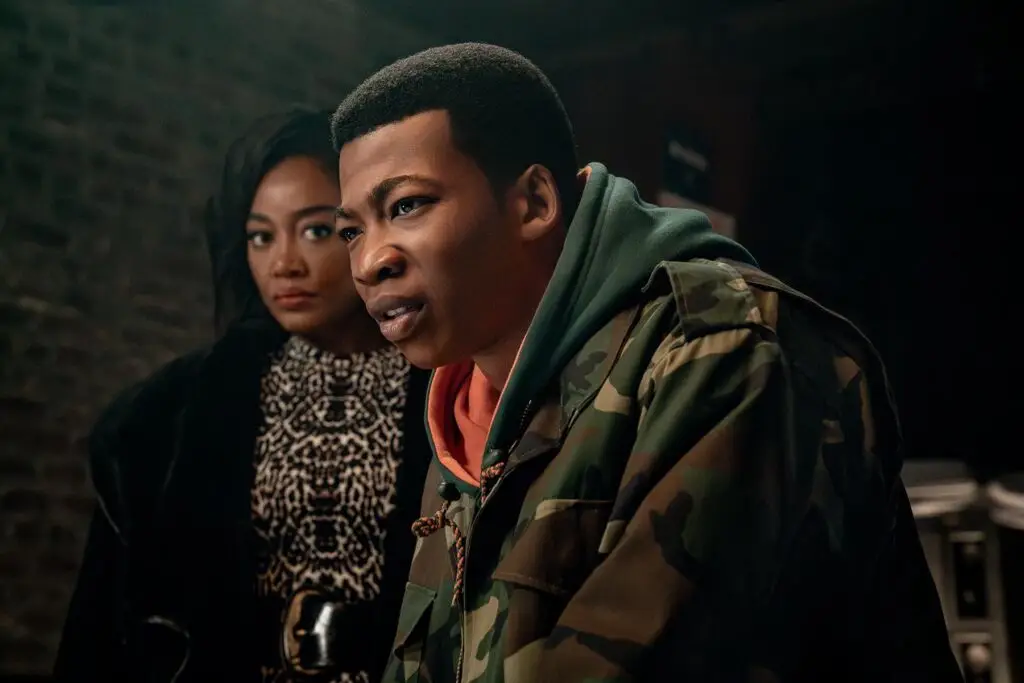
When people debate the greatest series in the Power Universe, the conversation usually starts with the original Power. After all, that’s where the franchise was built. Ghost, Tommy, Angela, and Kanan became television icons, and without that foundation there would be no expanded universe.
But when the discussion shifts from legacy to pure craftsmanship, one show separates itself from the rest.
Power Book III: Raising Kanan isn’t just the best-written series in the franchise—it’s the best acted. Every season has proven that this isn’t simply another crime drama. It’s a character study disguised as a street series, where every performance feels lived in rather than performed.
The biggest reason is the cast’s ability to communicate emotion without dialogue. In most television dramas, characters tell viewers exactly what they’re thinking. In Raising Kanan, the actors allow silence to become part of the script. A glance across a room, hesitation before pulling a trigger, or a slight change in body language often says more than a page of dialogue ever could.
At the center of everything is Patina Miller, whose portrayal of Raq Thomas deserves to be mentioned alongside some of television’s greatest crime bosses. Raq is ruthless, manipulative, intelligent, loving, protective, and emotionally broken—all at the same time. Miller never plays her as a cartoon villain. Instead, every decision feels like it comes from someone convinced she’s protecting her family, even while destroying it.
Her greatest strength is restraint. She rarely needs explosive speeches to command a scene. Whether she’s negotiating business, manipulating an enemy, or confronting one of her brothers, Miller controls every conversation with subtle facial expressions and calculated delivery. She makes Raq terrifying without ever having to raise her voice.
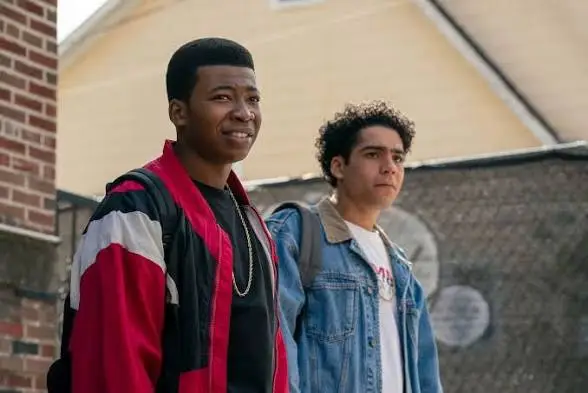
Then there’s Mekai Curtis, whose evolution as young Kanan has quietly become one of television’s strongest coming-of-age performances. Playing a younger version of a character immortalized by 50 Cent was never going to be easy. Instead of simply mimicking his mannerisms, Curtis gradually develops the confidence, emotional detachment, and presence that eventually become the Kanan audiences already know. It’s a transformation that has taken years rather than episodes, making every moral compromise feel earned instead of rushed.
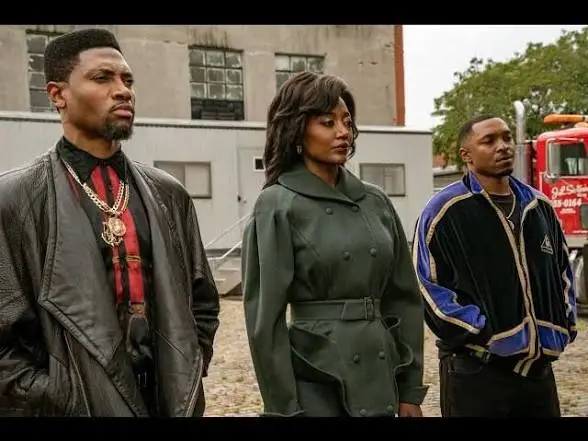
Perhaps the most surprising performance belongs to London Brown as Marvin Thomas.
Marvin easily has the best character development in the entire Power Universe.
When audiences first meet him, he’s impulsive, reckless, and emotionally immature. Through therapy, fatherhood, and accountability, Brown transforms Marvin into arguably the franchise’s most layered character. He balances comedic timing with heartbreaking vulnerability better than almost anyone else in the series. One episode can have viewers laughing at Marvin’s outrageous confidence, while the next reminds them he’s carrying years of trauma beneath that exterior.
That’s range.
Malcolm M. Mays deserves similar praise as Lou-Lou Thomas. Lou isn’t the loudest character in the room, but Mays plays him with constant internal conflict. He’s a man trapped between wanting legitimacy through music and being unable to escape the criminal empire that built his life. His depression, guilt, and frustration never feel exaggerated—they feel painfully authentic.

Then there’s Hailey Kilgore as Jukebox.
Fans already knew who Jukebox would eventually become from the original Power, but Kilgore refuses to rush that transformation. She portrays a teenager searching for love, identity, acceptance, and purpose while constantly experiencing rejection. Watching her optimism slowly disappear has become one of the show’s most heartbreaking storylines because Kilgore makes every emotional scar believable.
Joey Bada$$ also delivers one of the franchise’s most magnetic performances as Unique. What could have been another stereotypical street villain becomes a charismatic, unpredictable, and surprisingly layered character. Joey Bada$$ gives Unique a presence that commands every scene he’s in, making him one of the most memorable antagonists in the Power Universe.
The newest addition to the cast, Shameik Moore as Breeze, immediately justified years of fan anticipation. Breeze has been one of the most mysterious figures in the entire Power mythology, with fans waiting years to finally meet the man who helped shape Kanan, Ghost, and Tommy. Moore doesn’t overplay the role. Instead, he brings a quiet confidence, intelligence, and magnetic presence that instantly explains why everyone around him gravitates toward him. He has the charisma of a natural leader without forcing it, and in just a short amount of screen time, he already feels like someone capable of changing the trajectory of the entire story. It’s a performance built on subtlety, making Breeze feel even more dangerous because he never has to announce his power.
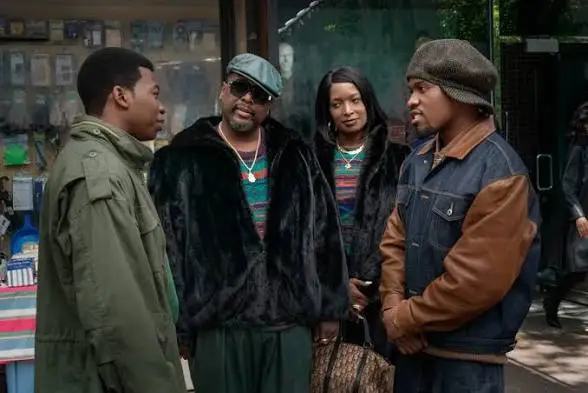
Veteran actor Omar Epps continues to elevate every scene as Detective Malcolm Howard, blurring the line between corrupt cop, father, and tragic figure. His performance is one of the emotional anchors of the series and another example of the show’s remarkable casting.
What truly separates Raising Kanan from the rest of the franchise is consistency.
Every major character feels fully realized. There are no obvious weak links in the main cast. Even supporting characters feel authentic because they exist for more than plot convenience. They have motivations, flaws, relationships, and histories that make the world feel alive.
That consistency also comes from the writing, which prioritizes character development over constant shock value. While other entries in the Power Universe sometimes lean into increasingly outrageous twists, Raising Kanan allows tension to build naturally through relationships. Violence has consequences. Betrayals carry emotional weight. Family conversations can feel just as suspenseful as shootouts.
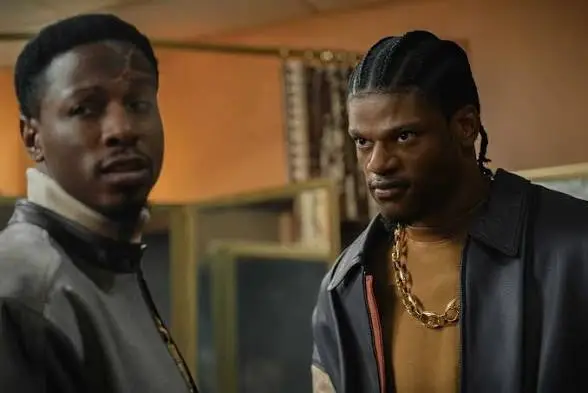
The original Power may always hold the crown for cultural impact. It introduced audiences to Ghost and Tommy and launched one of television’s biggest modern franchises.
But when judging purely by acting, Raising Kanan stands alone.
Its cast doesn’t simply play characters—they become them. Every performance feels authentic, every relationship feels earned, and every emotional moment lands because the actors trust subtlety over spectacle.
Years from now, when fans look back on the Power Universe, they may remember Ghost as the face of the franchise. But they’ll remember Raising Kanan as the series that proved the franchise could become prestige television.




The Wizards Beat The Bucks 128-116, Led By Anthony Davis & Trae Young

301Kenny Is Blending Genres, Embracing Go-Go, and Bringing a New Energy to the DMV Music Scene

From D.C. to WWE NXT, Saquon Shugars Is Ready for His Breakout!
From Outback to Ownership: How Davonne Austin Built Marley’s Bar & Grill in Prince George’s County

Kayelle Embraces Growth, Confidence and Creative Freedom With New Single “Right Now”

Marcus “Polo” Pilgrim Is Building a Bigger Table for Prince George’s County

Library of Congress Monthly Family Days Continue Through December 2026

Former Forest Park Teacher, Coach Acquitted of Indecent Exposure Charges

Iron Maiden and Megadeth played to a sold-out crowd at Jiffy Lube Live in Bristow

HBCU Week NOW Officially Launched Nationwide In Search For The Next Generation of HBCU Storytellers

Mike D Brings Beastie Boys Classics and a New Chapter to a Sold-Out 9:30 Club

World’s Largest Black Music Fest “AFRO+” Hits DMV, Expecting Over 120K Festival Goers.

Chichi Goon Puts His Dreams on Display With “I Have A Dream”

Psalm + Petal Co.: Turning Grief, Faith and Beauty Into Meaningful Floral Experiences

Devin McCoy: Building a Media Movement in the DMV With The Floaters

Monumental Sports Network and DAZN partnered to stream Capitals, Wizards, and Mystics games via Monumental+ on the DAZN platform.

Ten Entrepreneurs From The DMV To Look Out For

Lanterns Season 1 Preview: When Green Lantern Meets True Detective

Keeping Hopes Alive Is Redefining Mental Health and Healing in Baltimore

Keys to Wealth Fest Brings Financial Literacy, Entrepreneurship and Community Together in DC
Iron Maiden and Megadeth played to a sold-out crowd at Jiffy Lube Live in Bristow
Ten Entrepreneurs From The DMV To Look Out For
Mike D Brings Beastie Boys Classics and a New Chapter to a Sold-Out 9:30 Club
Psalm + Petal Co.: Turning Grief, Faith and Beauty Into Meaningful Floral Experiences
Monumental Sports Network and DAZN partnered to stream Capitals, Wizards, and Mystics games via Monumental+ on the DAZN platform.
HBCU Week NOW Officially Launched Nationwide In Search For The Next Generation of HBCU Storytellers
Devin McCoy: Building a Media Movement in the DMV With The Floaters
World’s Largest Black Music Fest “AFRO+” Hits DMV, Expecting Over 120K Festival Goers.
Former Forest Park Teacher, Coach Acquitted of Indecent Exposure Charges
Chichi Goon Puts His Dreams on Display With “I Have A Dream”
Library of Congress Monthly Family Days Continue Through December 2026
Marcus “Polo” Pilgrim Is Building a Bigger Table for Prince George’s County
From Outback to Ownership: How Davonne Austin Built Marley’s Bar & Grill in Prince George’s County
Kayelle Embraces Growth, Confidence and Creative Freedom With New Single “Right Now”
From D.C. to WWE NXT, Saquon Shugars Is Ready for His Breakout!
301Kenny Is Blending Genres, Embracing Go-Go, and Bringing a New Energy to the DMV Music Scene
The Wizards Beat The Bucks 128-116, Led By Anthony Davis & Trae Young
-

 Breaking12 months ago
Brinks Driver Attacked, $500K Stolen Outside Navy Federal Credit Union in Clinton
-

 Community11 months ago
The Maine Announces 2026 Headline Tour With April 19th Stop at DC’s 9:30 Club
-

 Community12 months ago
Netflix To Transform D.C.’s Historic Woodies Building Into A Creative Hub.
-

 Maryland News11 months ago
State of Maryland Faces A $1.4 Billion Deficit Heading Into 2026